There are many versions of lasagne out there. This is mine. Coming from the south of Italy, we never topped out Lasagne with Beschamel Sauce. Instead, we cover it generously with cheese. I like my lasagne built with as many layers of pasta, a massive wedge of pasta on the plate. The sauce is the hero of the dish, and the Bolognese recipe can be used to simply dress a pot of pasta as a meal on its own.
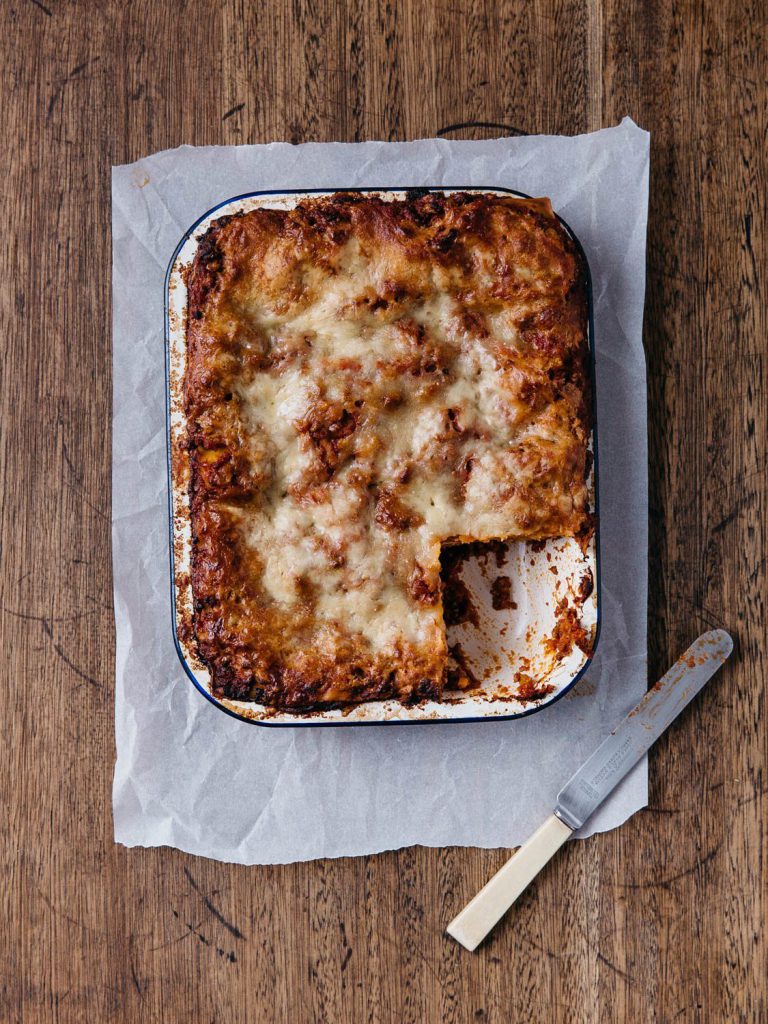
Lasagne is best made in stages – I like to make my Bolognese sauce ahead of time, perhaps the day before, then it is just a matter of assembly and cooking. The sauce benefits from the cook-ahead as the flavours will develop. To be honest, most of the time I make lasagne I have Bolognese ready to go in the freezer. However, you most certainly can make it all in one day – but it will take some time… Don’t skip the time the Bolognese needs to cook slowly, this dish is all about the flavour of that sauce!
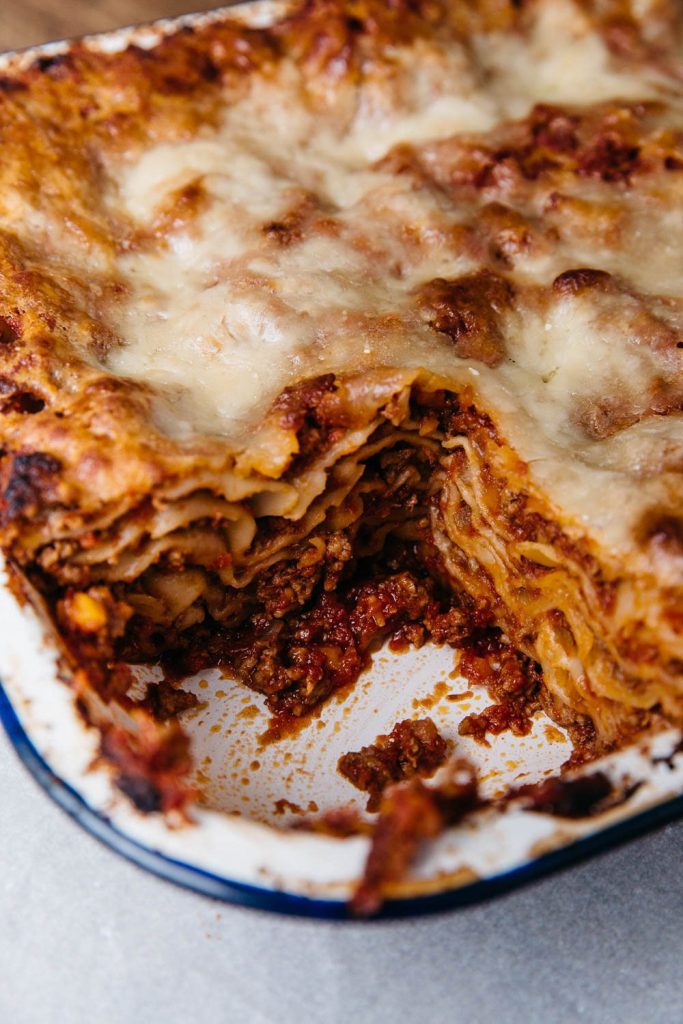
This recipe uses store-bought dried lasagne sheets. There is no need to pre-cook or moisten them. Just stack into the dish dry, breaking to fit as best as possible. The moisture from the sauce (and the water you add once assembles) will ‘cook’ the sheets as it bakes.
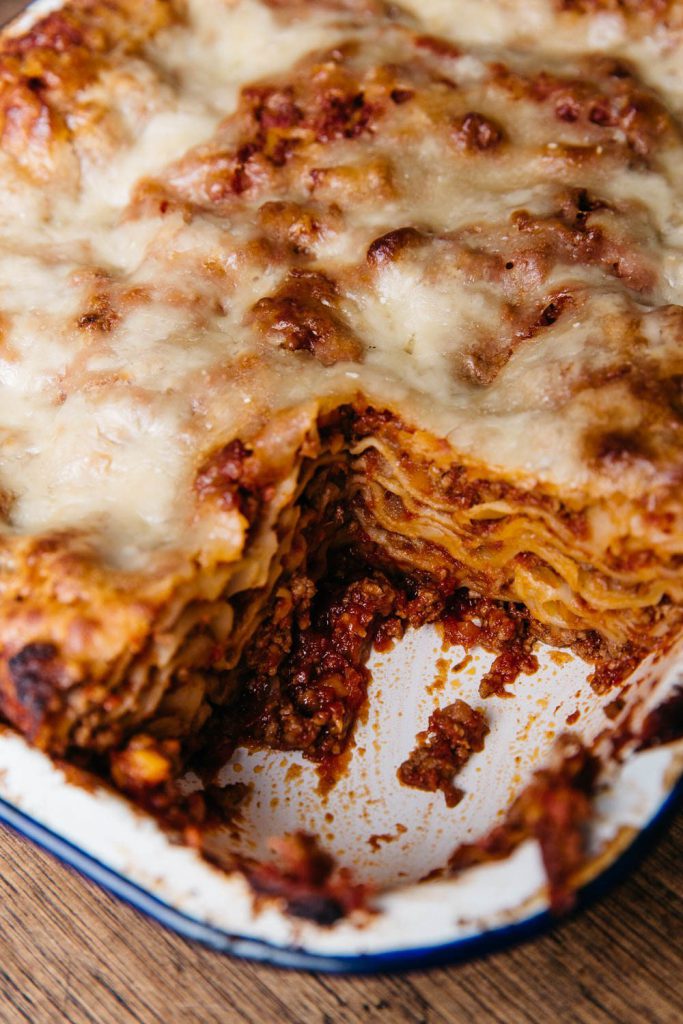
Once cooked, lasagne keeps really well. You can even freeze individual portions for those days when you just don’t have time to cook.
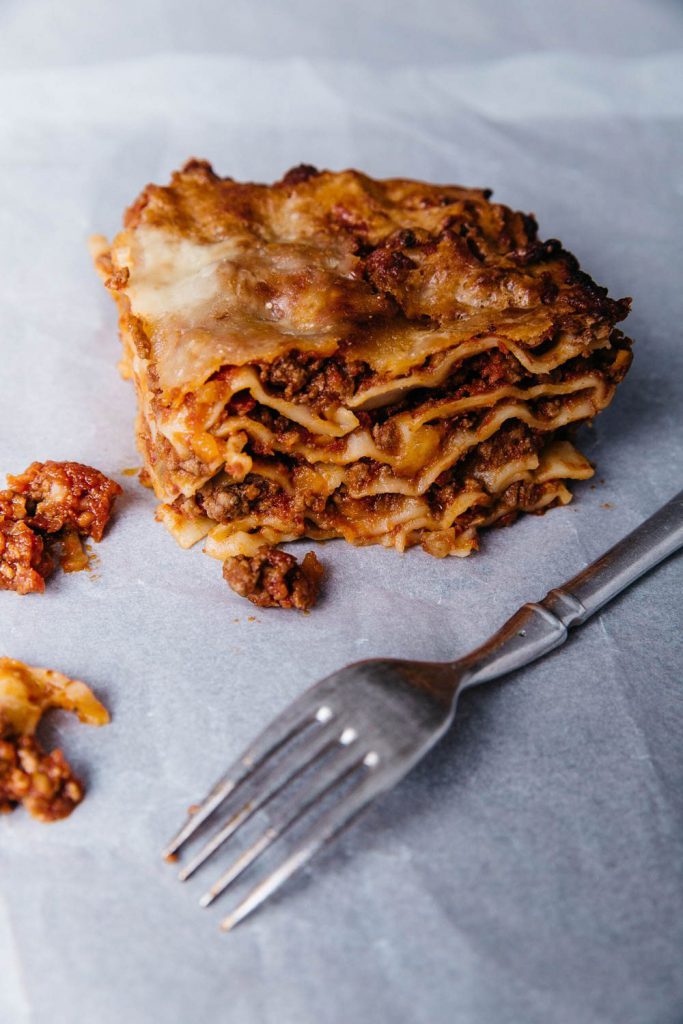
An eternal crowd pleaser, double this recipe if you have a horde of people to feed.
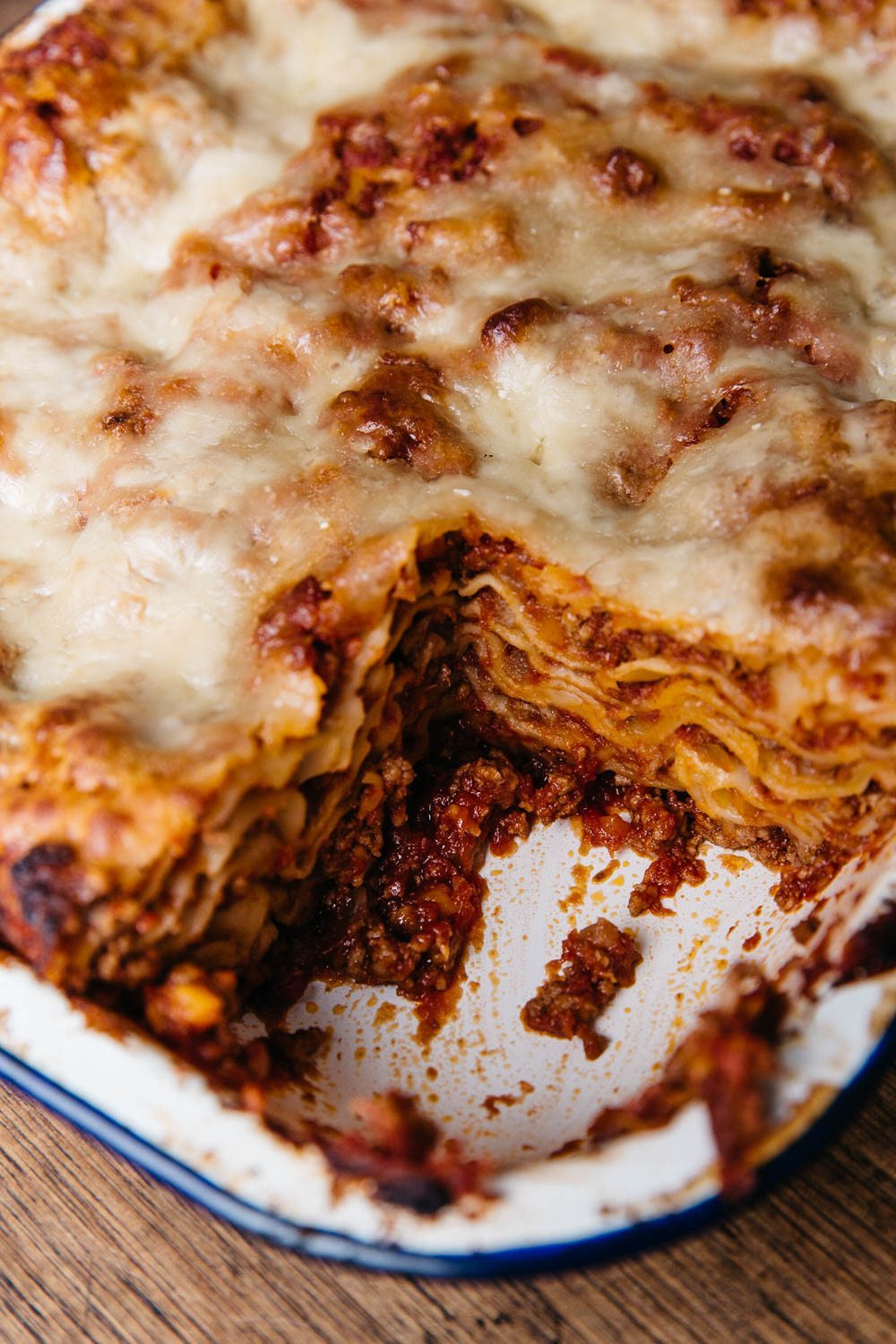
Family Lasagne
Ingredients
Method
- Tip the olive oil into a large heavy based pot and put on a medium heat.
- Add the onions, celery and carrots and cook, stirring, until onions are translucent.
- Add the garlic and sauté a further minute.
- Turn heat to high, and add the mince. Stir and cook until mince is browned.
- Add a good pinch of salt, the oregano, and a few turns of freshly ground pepper and stir to combine.
- Add the water, tinned tomatoes, passata, bay leaves and basil. Add a little more salt. Stir to combine.
- Bring to the boil, then turn the heat to low, cover with a lid, and cook for 2 hours.
- Remove lid, turn heat to medium and cook for another 30 minutes, stirring every now and then.
- Taste and season with salt as necessary (see note below).
- Remove the bay leaves before using.
- The sauce can be sealed and refrigerated for a few days, or frozen for 3 months. Bring to room temperature prior to making the lasagne.
- Preheat oven to 180C.
- Spoon a little Bolognese sauce into the base of a large baking dish (the dish I use is 25cm x 40cm and about 10 cm deep, however, adjust to suit whatever size dish you have at home). Spread to cover the bottom.
- Lay lasagne sheets to cover the base without overlapping. If the lasagne sheets don’t fit, just break them in half to fit in one single layer. Don't worry about small gaps, the lasagne sheets magically cook and meld together as it bakes.
- Top the lasagne sheets with a few ladlefuls of sauce. Scatter with a handful of the cheeses.
- Keep layering with pasta sheets and sauce and cheese until you reach the top of your dish.
- Top the last layer with sauce, then cover liberally with both cheeses.
- Depending on the size of your dish, you may not need all the cheese or sauce.
- Here’s the trick: if your sauce was thick, especially if you made it the day before, you will need to add some moisture . Pour about a cup of water around the sides of the dish. My rule is to see watery looking sauce about halfway up the lasagne. This will disappear as the lasagne cooks.
- Cover with a sheet of baking paper, then top with aluminum foil to seal.
- Bake, covered for 40 minutes, then remove foil and cook for a further 15 minutes or until golden and cooked through.
- Allow to sit for 20 minutes before serving. This allows the layers to settle, and it will be easier to cut.
Notes
Recipe from my book – Easy Home Cooking Italian Style, New Holland Publishers, Photo – Jonathan VDK



Leave a Reply